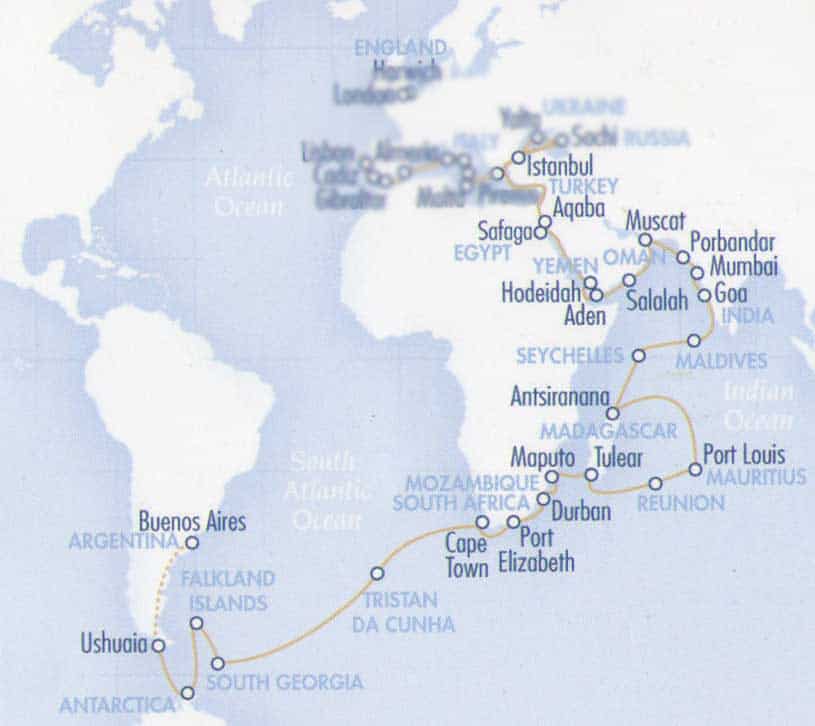
Leaving Syria, our next series
of stops were in Turkey – someplace
neither of us had been before. After visiting five different Turkish
cities, we can highly recommend the place. Just about every civilization
since the beginning (of civilization) has either been based in, or
had an outpost in Turkey – there are layers upon layers of ruins
everywhere you look. Hittites, Greeks, Romans,
Phoenicians, they all made their home here.
If you had really been “in the know”, you would have visited
Turkey a dozen years ago, while it was still quaint, inexpensive
fishing villages. Now it is an uber-trendy place to visit – the Caribbean
of Europe – with upscale beach hotels strung endlessly along the
coast, full of tourists, with prices to match. May, when we were there,
is before the “season”, so it wasn’t crowded. Weather
was 60s and often cloudy.
 Our first port was the small, delightful town of Alanya, not
far from the Syrian border. Like all the coastal cities, the
mountains rose quickly from the shore, crowding in all the houses
and hotels into a C-shaped ring around the bay. A ruined
castle topped the heights, with its long walls running all the way to
the sea. Actually, this could be a
description of every Turkish town we visited. We explored the ruins,
and ate the first of many delicious Turkish meals. It was
nice to be back in the “first world” again
Our first port was the small, delightful town of Alanya, not
far from the Syrian border. Like all the coastal cities, the
mountains rose quickly from the shore, crowding in all the houses
and hotels into a C-shaped ring around the bay. A ruined
castle topped the heights, with its long walls running all the way to
the sea. Actually, this could be a
description of every Turkish town we visited. We explored the ruins,
and ate the first of many delicious Turkish meals. It was
nice to be back in the “first world” again
Next stop was the similarly-named Atlanya, which was surrounded by famous Roman ruins. After exploring the city, we took a short cut and visited the local museum, where all the best stuff from the local ruins had been taken. It was stunning – hall after hall of sculpture, mosaics, sarcophagi. The signage made note of important pieces that had been removed illegally from Turkey and were now housed in the British Museum, Berlin Museum, etc.
On to Bodrum, whose main attraction was a huge crusader fort right along the water, housing an underwater archeology museum (the museum wasn’t underwater, it just contained things from ancient shipwrecks)
-600.jpg) The big sight in Kusadasi is Ephesus, site of a major Greek/Roman/
Byzantine temple and town, meant to impress everyone along the
major trade routes that criss-crossed this area. Mostly fallen
down, but the library façade and the coliseum are still standing;
the sidewalks constructed of exuberant mosaics still lie in
place; even the communal
The big sight in Kusadasi is Ephesus, site of a major Greek/Roman/
Byzantine temple and town, meant to impress everyone along the
major trade routes that criss-crossed this area. Mostly fallen
down, but the library façade and the coliseum are still standing;
the sidewalks constructed of exuberant mosaics still lie in
place; even the communal  toilet where you could sit cheek to
cheek with your neighbor and discuss the latest gladiator matchup
scores. Nearby
was the House of the Virgin Mary, where she was said to have
spent her last years – its
location was revealed by the visions of a 18th century German
nun. Also nearby was the Basilica of St. John (John the Baptist),
built over his tomb. He wrote Revelations while in prison near
Ephesus.
toilet where you could sit cheek to
cheek with your neighbor and discuss the latest gladiator matchup
scores. Nearby
was the House of the Virgin Mary, where she was said to have
spent her last years – its
location was revealed by the visions of a 18th century German
nun. Also nearby was the Basilica of St. John (John the Baptist),
built over his tomb. He wrote Revelations while in prison near
Ephesus.


 At long last, our cruise had come to its end. After a marathon of
packing, we said farewell to the crew and our fellow passengers,
and headed off on our own for four days in Istanbul. We found a delightful
little hotel right in the center of the old city, where we were unexpectedly
upgraded to a full suite with a view of the Sea of Marmara.
At long last, our cruise had come to its end. After a marathon of
packing, we said farewell to the crew and our fellow passengers,
and headed off on our own for four days in Istanbul. We found a delightful
little hotel right in the center of the old city, where we were unexpectedly
upgraded to a full suite with a view of the Sea of Marmara.
Istanbul is both a modern, up-to-date city and an exotic, mysterious, ancient town. It is located in one of the most strategically important locations in the ancient (and modern) world, on the straits between the Black Sea and the Mediterranean Sea, and at the crossroads between Asia and Europe – part of the city is on each of the two continents. Even more than other places in Turkey, there are innumerable layers of civilization and religions on display.
So, we set off to see Istanbul's important sights, which are as numerous as diverse:
 The Blue Mosque – Huge on the outside, ornately tiled and decorated
on the inside. Lots of worshippers, lots of tourists. This was the
last in a long series of astounding mosques we have seen on the trip – our
favorite was probably the one in Muscat, Oman.
The Blue Mosque – Huge on the outside, ornately tiled and decorated
on the inside. Lots of worshippers, lots of tourists. This was the
last in a long series of astounding mosques we have seen on the trip – our
favorite was probably the one in Muscat, Oman.
The Topkapi Palace, home of the Ottoman Sultans over the centuries. On view were a subset of their treasures – things like a four foot set of candlesticks made out of solid gold, completely encrusted with diamonds, sapphires the size of a golf ball. These guys set the standard for conspicuous consumption. The Relics building contained the original staff of Moses, Joseph’s turban, and other unbelievable mementos. Alas, no photos inside...
 Hagia
Sophia was the largest cathedral in the world for nearly
a thousand years, until the completion of the Seville Cathedral
in 1520. Once the Ottomans took over, it was converted to a mosque.
It’s now a museum. This
was to Eastern/Orthodox religions what the Vatican is to Catholics – the
mother church. It is impressive. Click on the thumbnails below
(except for last one) for larger versions.
Hagia
Sophia was the largest cathedral in the world for nearly
a thousand years, until the completion of the Seville Cathedral
in 1520. Once the Ottomans took over, it was converted to a mosque.
It’s now a museum. This
was to Eastern/Orthodox religions what the Vatican is to Catholics – the
mother church. It is impressive. Click on the thumbnails below
(except for last one) for larger versions.
-600.jpg)


 The Grand Bazaar has been selling things in its crowded, enclosed
alleyways for millennium, the exact items changing to meet the
times. And these times call for tourist geegaws –it has to be the
largest tourist trap in the world. Wonderfully picturesque, with hundreds
of shops all selling rugs, evil eyes, belly dancer outfits, Turkish Delight
candy, etc etc.
The Grand Bazaar has been selling things in its crowded, enclosed
alleyways for millennium, the exact items changing to meet the
times. And these times call for tourist geegaws –it has to be the
largest tourist trap in the world. Wonderfully picturesque, with hundreds
of shops all selling rugs, evil eyes, belly dancer outfits, Turkish Delight
candy, etc etc.
 The Egyptian Spice Market is the much smaller bazaar where the locals
shop – far more interesting and authentic than the Grand Bazaar.
Spices in colorful heaps, freshly-made sausage, medicinal leeches, traditional
clothing, every sweet you can imagine…..
The Egyptian Spice Market is the much smaller bazaar where the locals
shop – far more interesting and authentic than the Grand Bazaar.
Spices in colorful heaps, freshly-made sausage, medicinal leeches, traditional
clothing, every sweet you can imagine…..


We visited more places, but you get the idea.
Finally, it was time to go back home. Our flight was at 6am, which meant a 3:30am wakeup call. The trip home was 26 hours, in coach, amazingly uneventful if uncomfortable. Back to the real world for us (but with an invitation to cruise with Discovery again next winter.)
If you have just happened upon this page, sign up for our spam-free missives!
